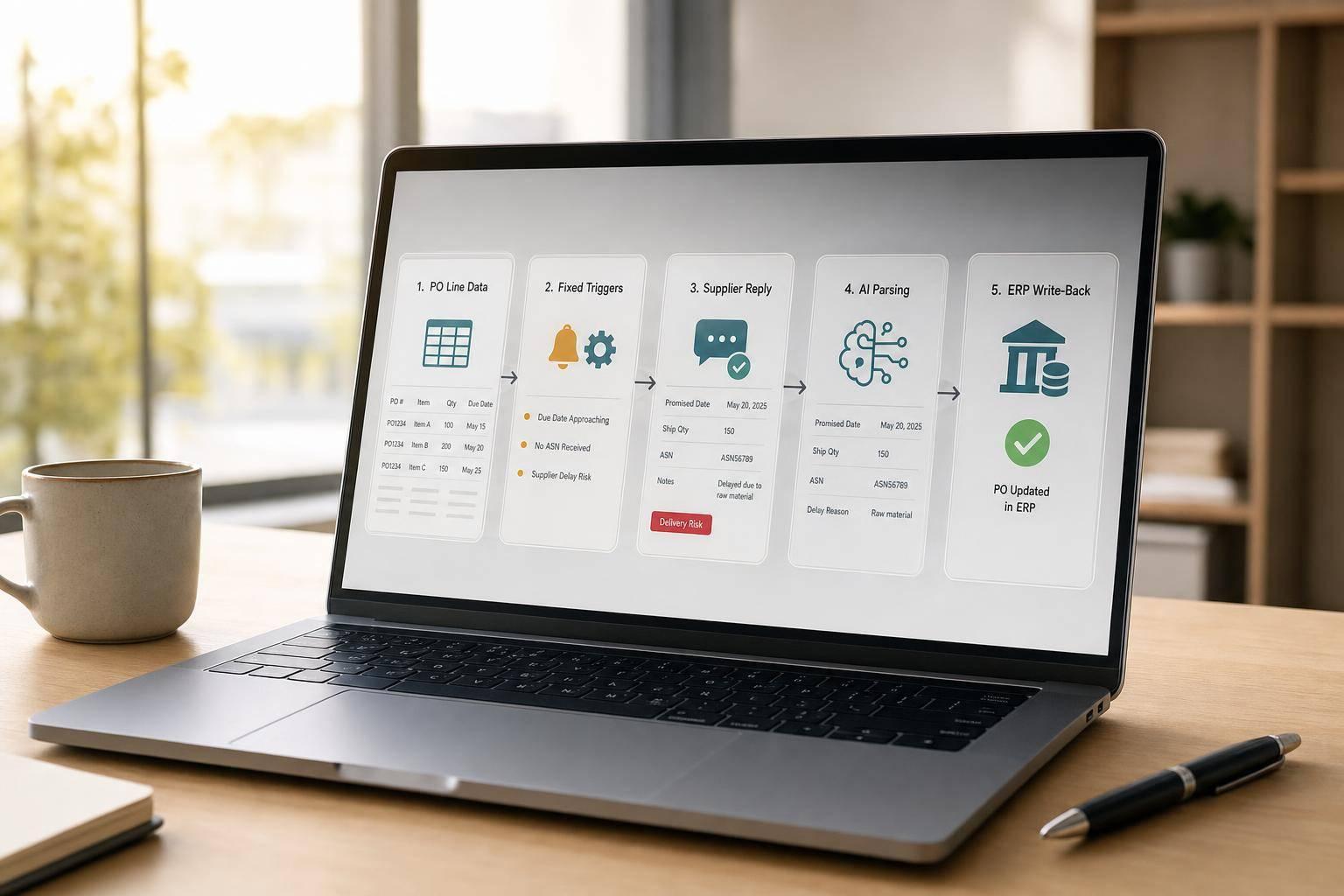
Supplier Compliance Tracking with AI: Benefits Explained
%202%20(1).png?width=40&height=40&name=20250501_1415_Professional%20LinkedIn%20Update_remix_01jt6gxkjmekavnvzsewk61z9w%20(1)%202%20(1).png)
TL;DR: AI helps me track supplier compliance without relying on spreadsheets, inbox searches, and manual reminders. It watches documents, ERP data, and supplier replies in real time, flags missing or expired records, and routes issues to the right person.
The short version: if I’m working with a large supplier base, manual tracking usually breaks in the same places: data is split across systems, deadlines get missed, and risk shows up too late. AI cuts manual work, improves record accuracy, and gives me a clearer view across more of the supplier network.
Here’s what matters most:
- Manual tracking does not scale well once supplier count grows
- Teams can spend about 70% of their time chasing emails and fixing data gaps
- AI can help cut manual effort by up to 70%
- AI-based tools can monitor 90% or more of the supplier base
- Better tracking helps reduce delays, audit stress, and supplier risk
If I had to sum it up in one line: AI turns supplier compliance from scattered follow-up work into a live, connected process.
Supplier compliance covers more than certificates. It also includes COAs, insurance documents, audit status, policy acknowledgments, regulatory declarations, and supplier performance signals. When all of that is tracked by hand, small gaps turn into shipment holds, production delays, and risk that spreads across the supply chain.
The core idea here is simple: instead of checking records once in a while, AI keeps watch all the time. It reads supplier documents, compares them with ERP and logistics data, spots mismatches, and starts follow-up steps before the problem gets worse.
A few points stand out:
- Scattered data slows down procurement, quality, and engineering teams
- Expired records can lead to penalties and shipment delays
- Weak visibility makes Tier-2 and Tier-3 supplier risk harder to see
- ERP-connected workflows keep compliance status tied to current purchasing activity
- Clear ownership and clean supplier data need to be in place before rollout
One useful way to look at it is this:
| Area | Manual tracking | AI-based tracking |
|---|---|---|
| Issue detection | Often after a problem shows up | Alerts as issues start |
| Document review | Human review of PDFs and emails | Automated field extraction and checks |
| Coverage | Often limited to a slice of suppliers | Much broader supplier monitoring |
| Follow-up | Email chains and manual reminders | Routed tasks with owners and due dates |
| Audit prep | Last-minute record gathering | Central record trail |
For me, the main takeaway is not that AI removes every compliance problem. It’s that it gives teams cleaner data, faster issue detection, and more control as supplier networks grow.
How CBS Automates Supplier Compliance Docs with SAP Business AI | SAP Partner
sbb-itb-b077dd9
Common Supplier Compliance Tracking Challenges
These problems usually show up in three places: scattered data, missed deadlines, and poor visibility.
Fragmented Data and Manual Follow-Ups
Supplier compliance data often lives in separate quality, procurement, engineering, and EHS systems. That means no single team has the full picture.
Say a procurement manager needs to check a supplier's certification status. In many cases, they end up digging through ERP exports, email threads, shared drives, and local spreadsheets just to piece together a reliable answer. It's slow, messy, and easy to get wrong.
When systems don't connect, problems stack up fast:
- Fields get missed
- Certificates go stale
- Supplier records pick up human error
Missed Deadlines and Uneven Oversight
Manual tracking only works if someone remembers every check. Across a large supplier base, that's a losing game.
A certificate expires and no alert goes out. An audit schedule slips because the team is already overloaded. Reviews become inconsistent too. Some suppliers get close attention, while others can go months without any check at all.
Nearly 35% of companies have faced penalties tied to expired supplier certifications. That number shows how common this gap is. When reviews happen only after something breaks, compliance turns into damage control instead of prevention.
Limited Visibility into Supplier Risk
Without real-time tracking, teams often spot risk too late. They may not notice trouble until a certificate has already lapsed, a supplier has failed or dropped out of view, or quality trends have been getting worse for months.
Manual processes also tend to stop at Tier-1 suppliers. What happens two or three levels deeper in the supply chain, at the subcontractor or raw material level, often stays hidden.
"A company can no longer say, 'We do not know what happens beyond tier one.' That answer is becoming unacceptable." - Isabella Harrington, AI in the Chain
When visibility is weak, escalation gets blocked and response time slows down. The team is forced to work from incomplete information. That's the kind of gap AI-driven visibility is meant to catch before it turns into a disruption.
How AI Tracks Supplier Compliance in Real Time
That gap starts to close when compliance data is watched all the time instead of checked by hand every so often. AI swaps periodic reviews for continuous monitoring. It pulls signals from supplier emails, ERP records, logistics data, and documents, then flags exceptions on its own.
Automated Monitoring Across Supplier Data
AI links data sources that usually live in separate systems - purchase orders, logistics data, product classifications, and country-of-origin data - and watches them together. If something doesn’t match, the system catches it right away.
For example, AI can track how fast suppliers respond to Acknowledgments, Open Order Reports, and shipment data requests, flagging slow or incomplete replies before they turn into downstream delays. It can also watch for upcoming or expired certifications and missing fields in supplier records, sending alerts before a deadline slips by.
Once those data points are connected, AI can also read supplier documents and compare them with system records.
AI Document Parsing and Exception Alerts
When a supplier sends a PDF certificate or fills out a compliance form, AI can parse the document automatically, pull out the relevant fields, check them for completeness and consistency, and flag anything that looks off.
If a certificate is missing, a declared country of origin doesn’t match shipping records, or a supplier’s response is overdue, the system triggers an automated exception workflow with a specific owner and deadline attached. The point is action, not a pile of alerts.
ERP-Connected Workflows and Escalation Rules
AI compliance tracking works best when it’s tied straight into your ERP. When ERP and PLM data are connected, the system can automatically recalculate compliance status when a component changes or a regulation is updated. That keeps compliance status tied to the same records procurement and operations teams already use.
Escalation paths are set ahead of time, so when an issue shows up, the right owner gets notified automatically. Low-risk suppliers can be watched automatically, while high-risk relationships get human attention first. That works far better than manual review across every vendor.
That creates the basis for faster detection, cleaner handoffs, and fewer manual follow-ups.
Benefits of AI-Based Supplier Compliance Tracking
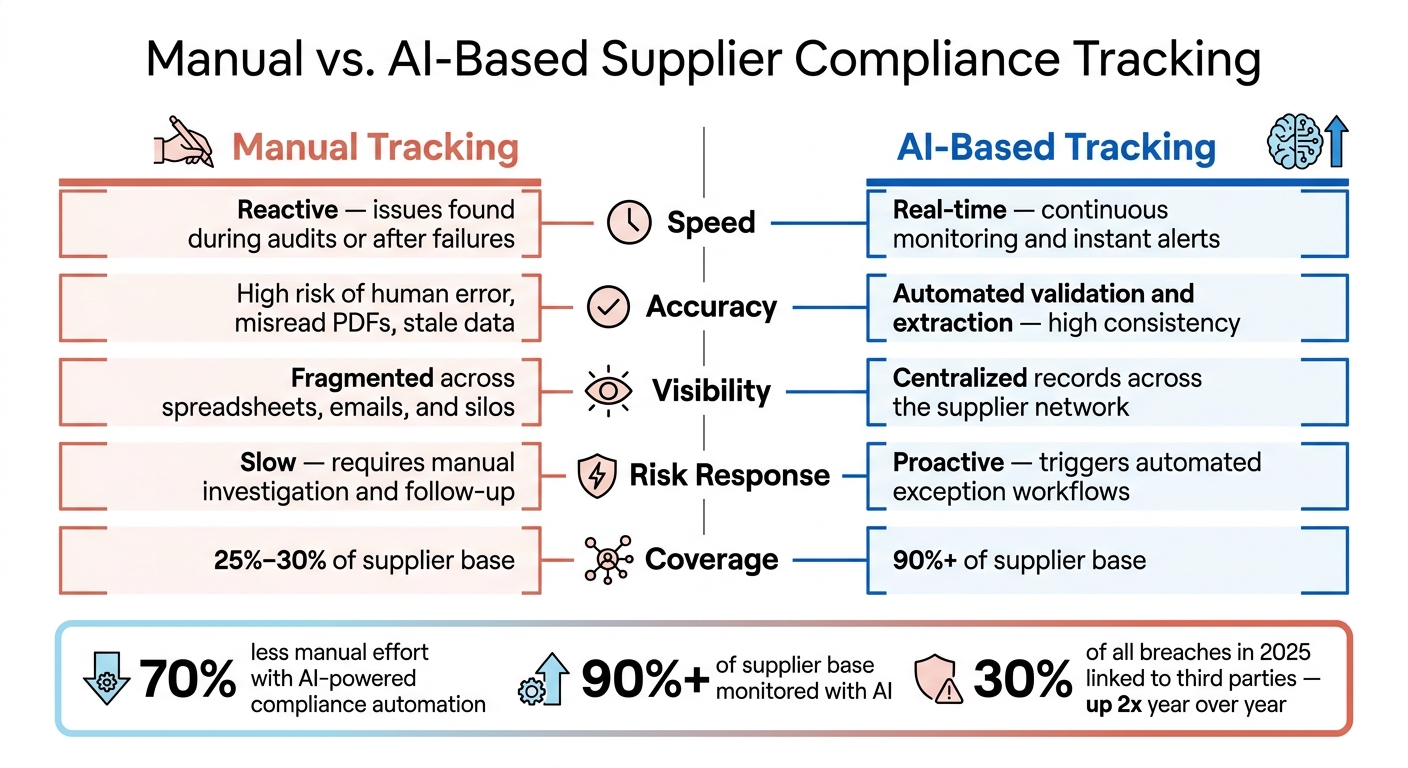
Manual vs. AI-Based Supplier Compliance Tracking: Key Differences
Faster Issue Detection and Fewer Manual Tasks
When monitoring is automated, teams spend a lot less time chasing paperwork and a lot more time fixing actual problems.
AI can collect supplier documents on its own and flag expired certificates, missing fields, and other exceptions in real time. That changes the day-to-day work in a big way. Instead of checking every supplier record by hand, teams step in only when something is wrong. Companies using AI-powered compliance automation report up to 70% less manual effort.
Better Accuracy, Visibility, and Risk Response
AI-based tracking can monitor 90% or more of a supplier base by pulling from connected data sources and checking records automatically, without adding headcount.
You can see the difference pretty clearly:
| Feature | Manual Tracking | AI-Based Tracking |
|---|---|---|
| Speed | Reactive; issues found during audits or after failures | Real-time; continuous monitoring and instant alerts |
| Accuracy | High risk of human error, misread PDFs, and stale data | Automated validation and extraction; high consistency |
| Visibility | Fragmented across spreadsheets, emails, and silos | Centralized records across the network |
| Risk Response | Slow; requires manual investigation and follow-up | Proactive; triggers automated exception workflows |
| Coverage | 25% to 30% of supplier base | 90% or more of supplier base |
That visibility gap gets painful when something breaks. Third-party breaches climbed to 30% of all cases in 2025, doubling year over year. And the average company manages 286 vendors. At that scale, quarterly spreadsheet reviews just don’t hold up.
Stronger Decisions and More Scalable Compliance Operations
Better data usually leads to better calls. When compliance status feeds straight into ERP workflows - when Leverage AI connects ERP data to compliance workflows - procurement teams can make sourcing decisions using current, verified information instead of old snapshots.
Audit readiness gets better too. Centralized, automated platforms create centralized records and a defensible audit trail, which cuts the time needed for last-minute audit prep. For mid-market manufacturers and distributors, that means tighter control as supplier networks grow. Connected ERP data gives procurement current status for sourcing and audit decisions.
"AI does not eliminate financial risk, but it materially changes procurement's ability to see it coming, prioritize it correctly, and act before operations are disrupted." - JAGGAER
Key Capabilities and Steps for Adopting AI Compliance Tracking
Capabilities That Support Compliance Tracking
Once the risks are clear, the next move is picking the right capabilities and setting up the data they depend on.
Start with four core capabilities: document parsing, continuous monitoring, risk scoring, and ERP integration. Each one helps fix a common weak spot, like scattered data, missed deadlines, or poor visibility.
AI document parsing pulls structured data from supplier emails and PDFs and sends that data to a central system. Continuous monitoring tracks certification expiration dates and flags exceptions in real time, which helps teams move past periodic manual reviews and catch issues sooner. Automated risk scoring sorts suppliers by geography, material type, and documentation completeness, so human review stays focused on the cases that need attention most. ERP integration connects the whole process. When compliance status links directly to open purchase orders and shipment plans, procurement teams can work from current data instead of old records. Leverage AI connects ERP data, automates supplier follow-ups, and shows compliance status in real time.
Still, these tools don’t work well on their own. Supplier records and escalation rules need to be defined first.
What to Prepare Before Implementation
Before automation goes live, clean the data and assign ownership.
AI can speed up compliance tracking, but it still runs on clean data, clear ownership, shared definitions, and regular updates. Before implementation, clean your supplier master data. Inconsistent supplier names, missing manufacturing site records, and outdated certificates will limit what any AI tool can do. After that, define your compliance criteria: a clear Supplier Code of Conduct and a risk-based way to segment suppliers. Then set document standards for required credentials like ISO certifications, insurance certificates, and regulatory disclosures before automating parsing and validation.
Ownership comes next. Decide who gets notified when a supplier falls out of compliance, what the escalation path looks like, and how ERP records stay in sync with supplier communications. If that structure isn’t in place, automated alerts end up going nowhere useful.
Conclusion: AI Makes Compliance Tracking More Controlled and Scalable
Manual supplier compliance tracking creates delays, blind spots, and a workload that gets harder to manage as supplier networks grow. AI addresses those problems with automated monitoring, real-time alerts, consistent document validation, and ERP-connected workflows that keep compliance status current across the full supplier base. For manufacturers and distributors, that foundation is what turns AI into a more controlled, resilient compliance process.
FAQs
How does AI fit into my ERP workflow?
AI fits into your ERP workflow as an intelligent layer that cuts manual work, keeps data in sync, and gives teams a live view of what’s happening.
It adds to core ERP functions by taking over repeat tasks like supplier follow-ups, document validation, and data reconciliation. Leverage AI connects with your ERP to update records on its own, trigger alerts before small issues turn into bigger ones, and turn static data into insights your team can act on.
What data should I clean before rollout?
Before rollout, audit and standardize data across your ERP, procurement, and inventory systems so everything points back to one source of truth.
That means cleaning up scattered records sitting in spreadsheets, email threads, and disconnected tools. Fix mismatched entries, remove duplicates, and update expired certificates and old supplier profiles. If the data is messy, AI will struggle to handle compliance and risk the way you expect.
Can AI track risk beyond Tier-1 suppliers?
Yes. AI can improve visibility across multiple supplier tiers by analyzing trade, logistics, and regulatory data. That helps teams spot sub-tier dependencies, flag possible Tier-2 and Tier-3 disruptions, and find hidden links across the supply chain.
Leverage AI builds on that with ERP-connected visibility and automation. In plain terms, it helps you track supplier performance and compliance across your network, so you can spot risk earlier and cut down on manual, reactive work.