---
title: Microsoft Dynamics 365 PO Automation Integration | Leverage AI
description: Leverage AI integrates with Dynamics 365 (Business Central, Finance and Supply Chain, Navision) to automate PO confirmations and supplier communication — no ERP customization required.
---
[Skip to main content](https://tryleverage.ai/integrations/dynamics-365#main-content)
[   ](https://tryleverage.ai?hsLang=en)
- Show submenu for Platform Platform
- [CONNECT: Integrations](https://tryleverage.ai/integrations)
- [PARSE: Document Parsing](https://tryleverage.ai/document-parsing)
- [MEASURE: Supplier Performance](https://tryleverage.ai/supplier-performance)
- [PAY: Trade Finance](https://tryleverage.ai/payments)
- [ENGAGE: PO Automation](https://tryleverage.ai/purchase-order-automation)
- [TRACK: Shipments](https://tryleverage.ai/shipment-tracking)
- [COPILOT: AI Agents](https://tryleverage.ai/artificial-intelligence)
- Show submenu for Case Studies Case Studies
- [Manufacturing](https://tryleverage.ai/case-study-manufacturing)
- [Distribution](https://tryleverage.ai/case-study-distribution)
- [Pharma & Biotechnology](https://tryleverage.ai/case-study-pharma-biotechnology)
- [Food Production](https://tryleverage.ai/case-study-food-production)
- [Furniture](https://tryleverage.ai/case-study-furniture)
- [Supplements](https://tryleverage.ai/case-study-supplements-manufacturing)
- [Packaging](https://tryleverage.ai/case-study-packaging-manufacturing)
- [Automotive Parts Distributor](https://tryleverage.ai/case-study-auto-parts-distributor)
- [Commercial Equipment](https://tryleverage.ai/case-study-commercial-equipment)
- [Wood Processing Equipment](https://tryleverage.ai/case-study-wood-processing-equipment)
- Show submenu for Company Company
- [Our Story](https://tryleverage.ai/our-story)
- [Podcast](https://tryleverage.ai/podcast)
- [Blog](https://tryleverage.ai/blog)
- [Careers](https://tryleverage.ai/careers)
- [Partners](https://tryleverage.ai/partners)
- [Contact Us](https://tryleverage.ai/contact)
Open main navigation
Close main navigation
- Show submenu for Platform Platform
- Platform
- [CONNECT: Integrations](https://tryleverage.ai/integrations)
- [PARSE: Document Parsing](https://tryleverage.ai/document-parsing)
- [MEASURE: Supplier Performance](https://tryleverage.ai/supplier-performance)
- [PAY: Trade Finance](https://tryleverage.ai/payments)
- [ENGAGE: PO Automation](https://tryleverage.ai/purchase-order-automation)
- [TRACK: Shipments](https://tryleverage.ai/shipment-tracking)
- [COPILOT: AI Agents](https://tryleverage.ai/artificial-intelligence)
- Show submenu for Case Studies Case Studies
- Case Studies
- [Manufacturing](https://tryleverage.ai/case-study-manufacturing)
- [Distribution](https://tryleverage.ai/case-study-distribution)
- [Pharma & Biotechnology](https://tryleverage.ai/case-study-pharma-biotechnology)
- [Food Production](https://tryleverage.ai/case-study-food-production)
- [Furniture](https://tryleverage.ai/case-study-furniture)
- [Supplements](https://tryleverage.ai/case-study-supplements-manufacturing)
- [Packaging](https://tryleverage.ai/case-study-packaging-manufacturing)
- [Automotive Parts Distributor](https://tryleverage.ai/case-study-auto-parts-distributor)
- [Commercial Equipment](https://tryleverage.ai/case-study-commercial-equipment)
- [Wood Processing Equipment](https://tryleverage.ai/case-study-wood-processing-equipment)
- Show submenu for Company Company
- Company
- [Our Story](https://tryleverage.ai/our-story)
- [Podcast](https://tryleverage.ai/podcast)
- [Blog](https://tryleverage.ai/blog)
- [Careers](https://tryleverage.ai/careers)
- [Partners](https://tryleverage.ai/partners)
- [Contact Us](https://tryleverage.ai/contact)
- [Login](https://app.lvrg.ai/signin)
[See Demo](https://tryleverage.ai/request-a-demo)
[Login](https://app.lvrg.ai/signin)
[See Demo](https://tryleverage.ai/request-a-demo?hsLang=en)
# Microsoft Dynamics 365 PO Automation Integration
Automate supplier PO confirmations, flag delivery exceptions, and get real-time OTIF visibility — without modifying your Dynamics 365 environment.
Leverage AI connects directly to your Microsoft Dynamics 365 instance to automate the supplier communication layer your ERP was never designed to handle. Whether you run Business Central, Finance and Supply Chain Management, or Navision, Leverage sits between your ERP and your suppliers — capturing PO acknowledgments, flagging exceptions before they become delays, and surfacing delivery risk data in the format your team already works in. No custom development. No ERP modification.
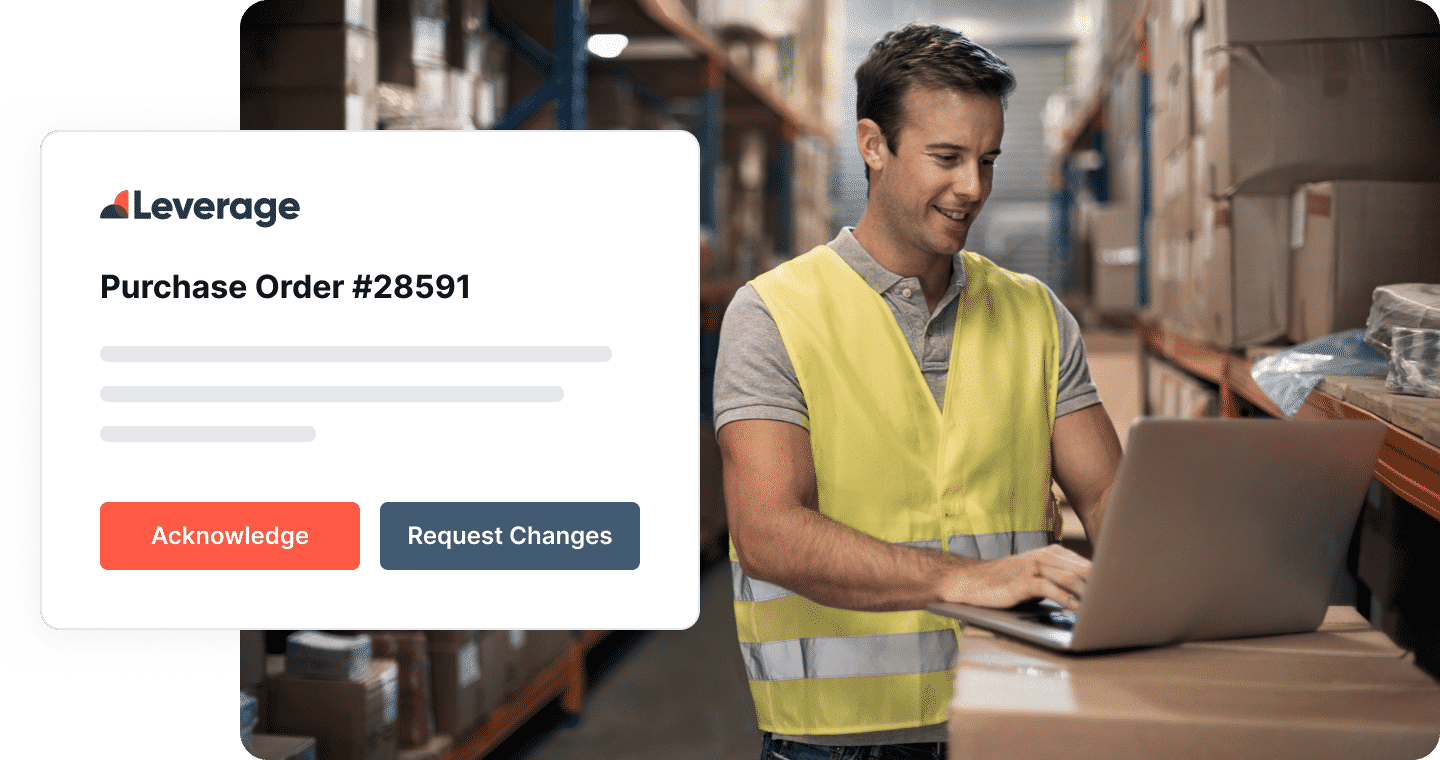
### Acknowledgement Requests that suppliers love
No need to train your suppliers how to use a separate vendor portal, or remind them to log in to a new technology. Our smart digital POs are embedded right in their inboxes - so if your suppliers know how to use email, they know how to use Leverage.
### How Leverage AI Works with Dynamics 365
**1. Connect** — Leverage reads open POs directly from your D365 instance via API or file-based sync. No middleware required.
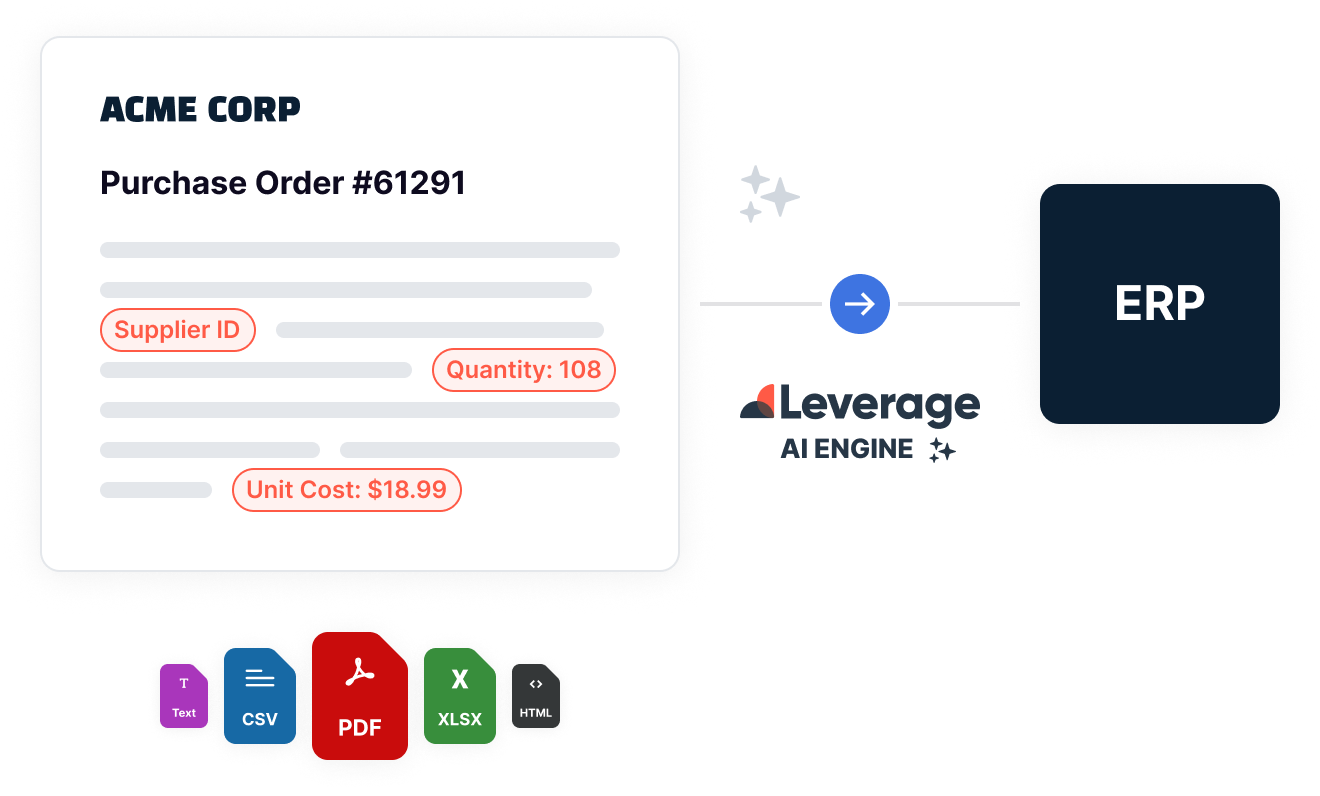
**2. Communicate** — Automated outbound supplier follow-up on PO acknowledgment, ship date confirmation, and exception reporting, meeting suppliers where they already work: email, portal, or EDI.
**3. Capture** — Supplier responses flow back into structured data automatically. No manual inbox processing.
**4. Alert** — Exceptions, late acknowledgments, and OTIF risks surface in your team's workflow before they hit production.
### Open Order Reports - on auto pilot
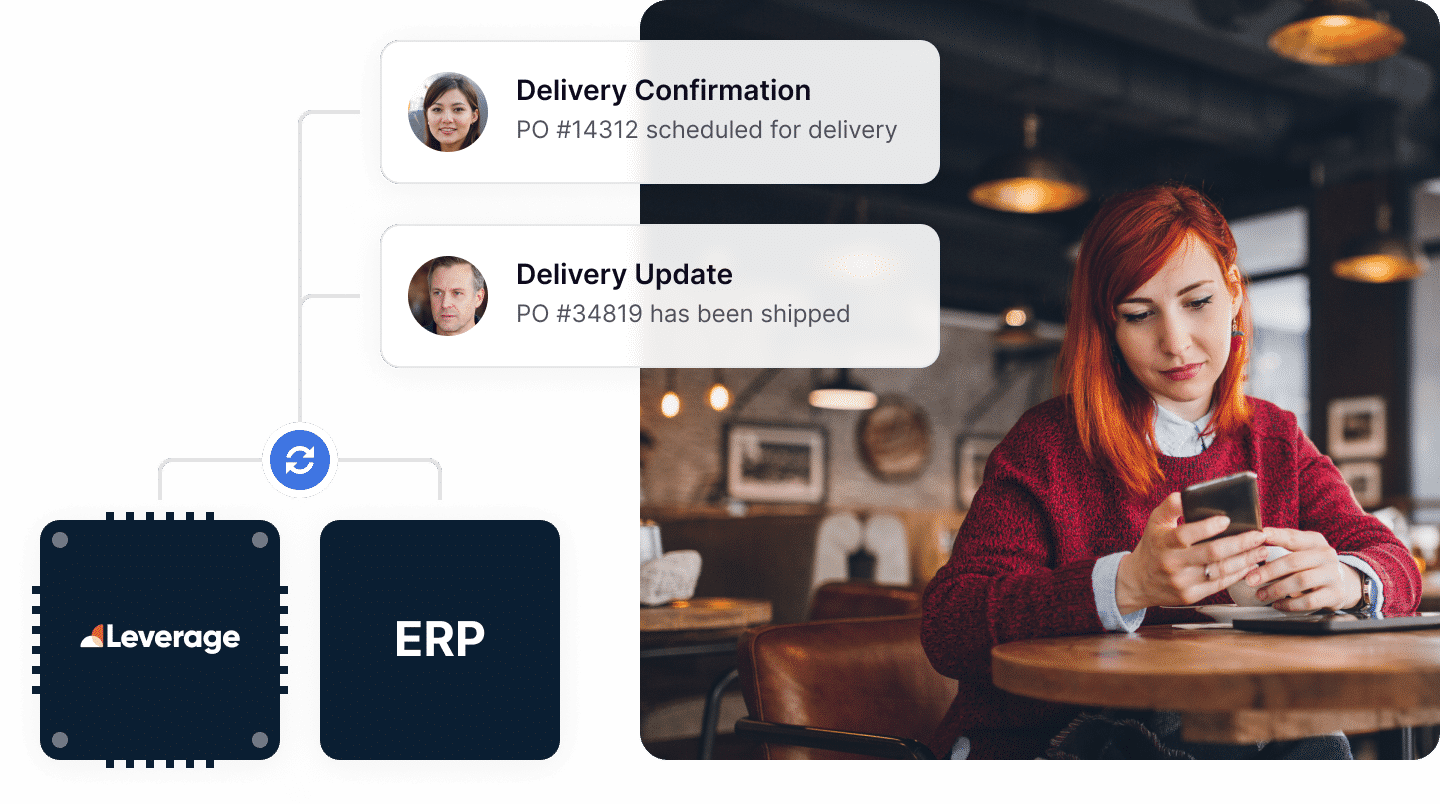
Automate regular open order reports in a pre-set digest for your suppliers to continue to update leads times throughout the PO lifecycle.
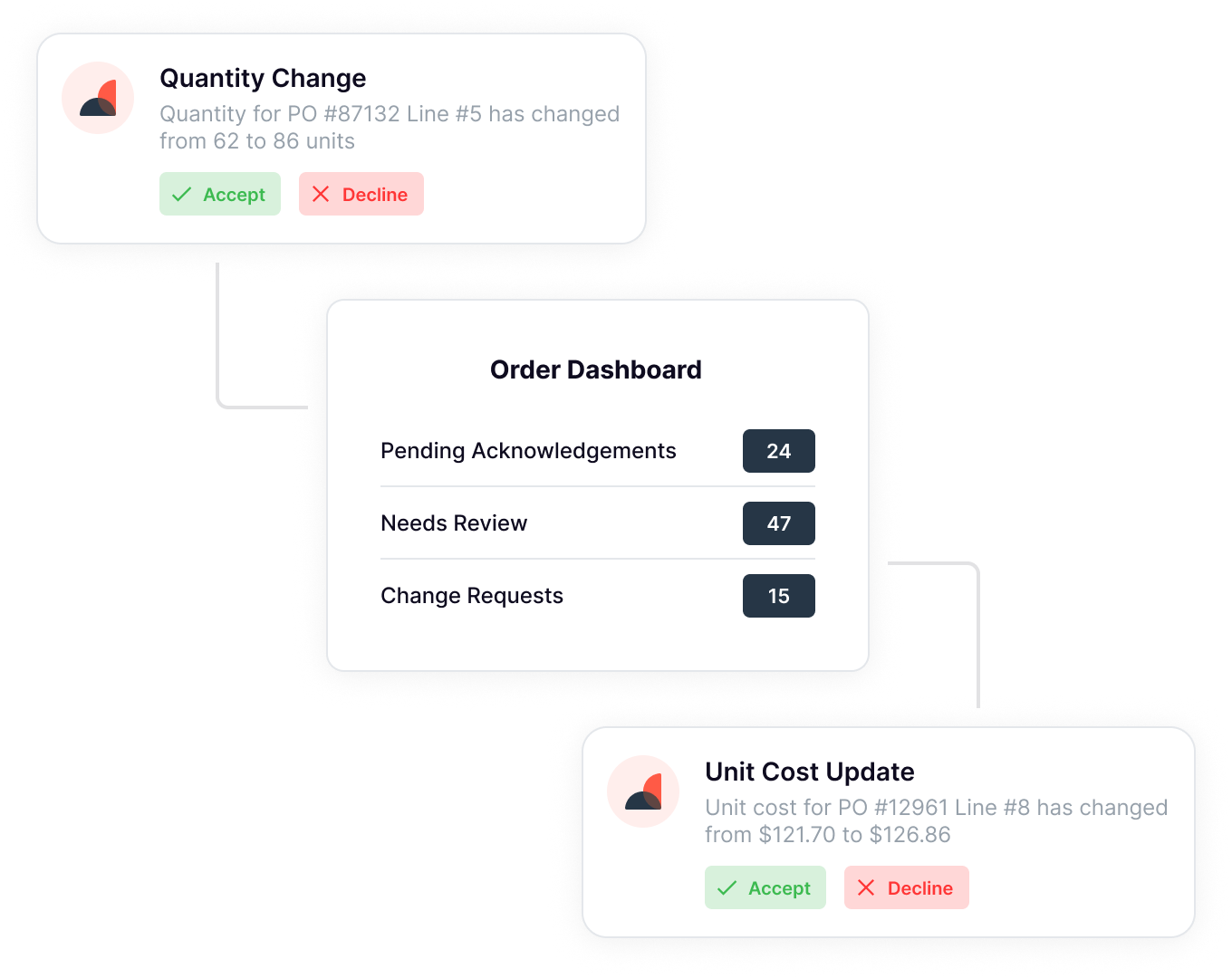
Your team will receive prompt notifications as changes in promise dates, costs, or quantity occurs.
### Dynamics 365-Specific Pain Points We Solve
**PO acknowledgment is a manual gap in D365.** Dynamics tracks what you ordered and when it arrived. The middle — did the supplier confirm, is the date still valid, have quantities changed — is a manual process for most D365 shops. Leverage AI fills that gap without touching your ERP configuration.
**Business Central mid-market teams run lean.** The typical BC shop has one or two people managing 50-200 active suppliers. Leverage gives those teams the automation coverage of a team twice the size without adding headcount.
**Finance and Supply Chain users need pre-receipt exception data.** F&SCM surfaces receipt data, not supplier-side risk. Leverage pushes exception signals back into your workflow before a miss happens.
**Legacy Navision environments.** Older NAV installations often have limited API surface. Leverage supports file-based sync as a fallback. No integration dead ends.
According to Aberdeen Group (2023), automated PO tracking reduces operational costs by up to 30%. Gartner notes that 50% of purchase order lines undergo changes after issuance — the question is whether your team catches those changes before they become delays.
[Book a Demo](https://tryleverage.ai/request-a-demo?hsLang=en)
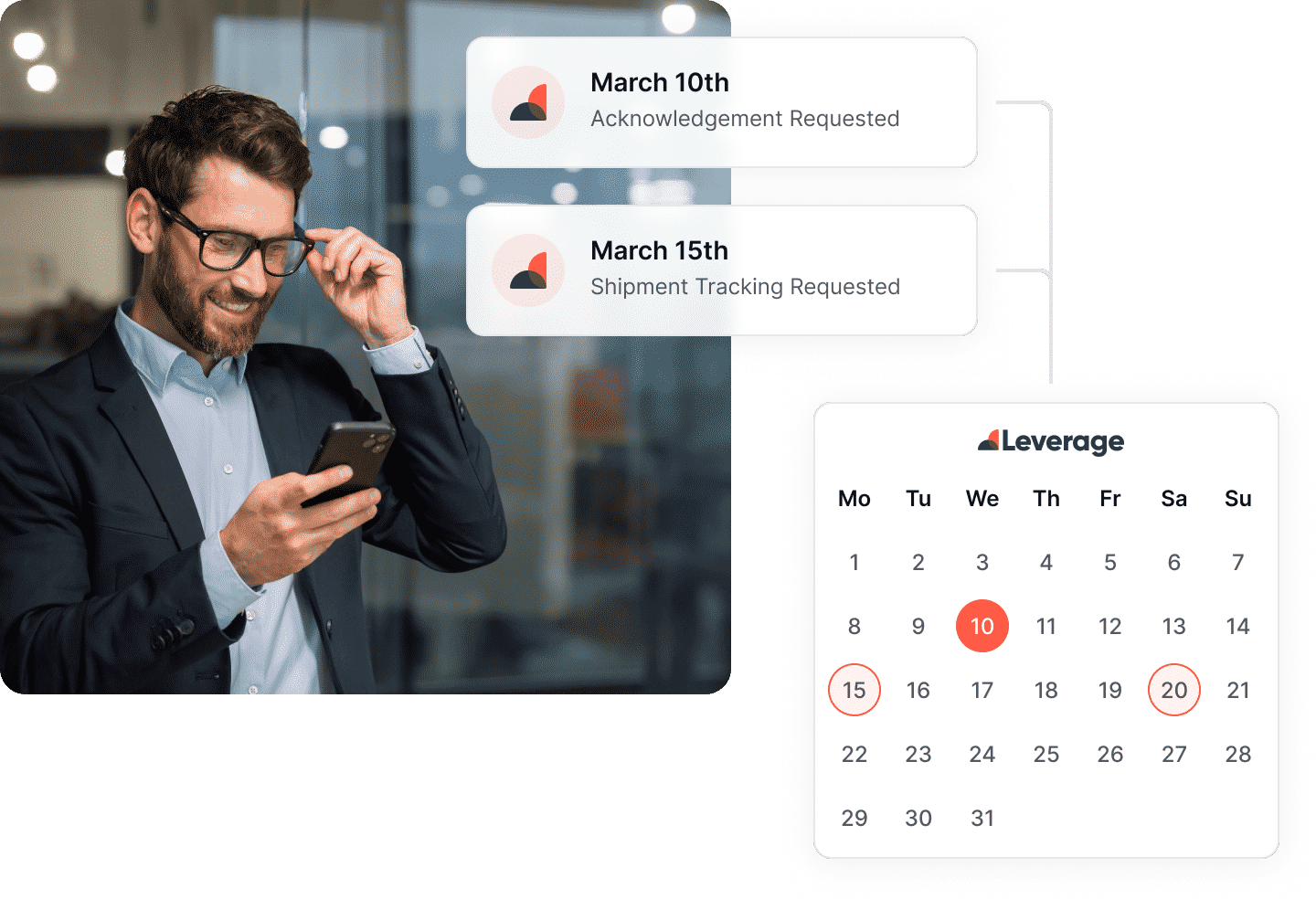
### Customizable Cadence
Our automated supplier reminders to input acknowledgments, lead time updates, and ASNs can be configured by supplier, item, or even PO priority, so you can rest assured that you have full coverage and are top of mind for any type of vendor.
## Ready to Get Started?
Connect with a expert to see the Leverage platform in action.
[](https://tryleverage.ai?hsLang=en)
Leverage AI delivers an end-to-end supply chain visibility platform powered by artificial intelligence that enables teams to ensure on-time delivery, in-full completion, within-budget costs, and high-quality standards.
Copyright © 2026 LVRG, Inc.
- Platform
- [CONNECT: Integrations](https://tryleverage.ai/integrations)
- [PARSE: Document Parsing](https://tryleverage.ai/document-parsing)
- [MEASURE: Supplier Performance](https://tryleverage.ai/supplier-performance)
- [PAY: Trade Finance](https://tryleverage.ai/payments)
- [ENGAGE: PO Automation](https://tryleverage.ai/purchase-order-automation)
- [TRACK: Shipments](https://tryleverage.ai/shipment-tracking)
- [COPILOT: AI Agents](https://tryleverage.ai/artificial-intelligence)
- Case Studies
- [Manufacturing](https://tryleverage.ai/case-study-manufacturing)
- [Distribution](https://tryleverage.ai/case-study-distribution)
- [Pharma & Biotechnology](https://tryleverage.ai/case-study-pharma-biotechnology)
- [Food Production](https://tryleverage.ai/case-study-food-production)
- [Furniture](https://tryleverage.ai/case-study-furniture)
- [Supplements](https://tryleverage.ai/case-study-supplements-manufacturing)
- [Packaging](https://tryleverage.ai/case-study-packaging-manufacturing)
- [Automative Parts Distributor](https://tryleverage.ai/case-study-auto-parts-distributor)
- [Commercial Equipment](https://tryleverage.ai/case-study-commercial-equipment)
- [Wood Processing Equipment](https://tryleverage.ai/case-study-wood-processing-equipment)
- Resources
- [Security & Trust](https://tryleverage.ai/security)
- [Terms of Service](https://tryleverage.ai/terms)
- [Privacy Policy](https://tryleverage.ai/privacy)
- [Vulnerability Disclosure Policy](https://tryleverage.ai/vdp)
- Company
- [Our Story](https://tryleverage.ai/our-story)
- [Podcast](https://tryleverage.ai/podcast)
- [Blog](https://tryleverage.ai/blog)
- [Careers](https://tryleverage.ai/careers)
- [Partners](https://tryleverage.ai/partners)
- [Contact Us](https://tryleverage.ai/contact)
-
-
-
```json
{
"@context" : "https://schema.org",
"@type" : "Organization",
"contactPoint" : {
"@type" : "ContactPoint",
"contactType" : "sales",
"telephone" : "+1-929-470-3086"
},
"description" : "AI-powered purchase order automation and supplier performance platform for manufacturers and distributors.",
"logo" : "https://tryleverage.ai/hubfs/leverage-logo-dark.png",
"name" : "Leverage AI",
"url" : "https://tryleverage.ai"
}
```